

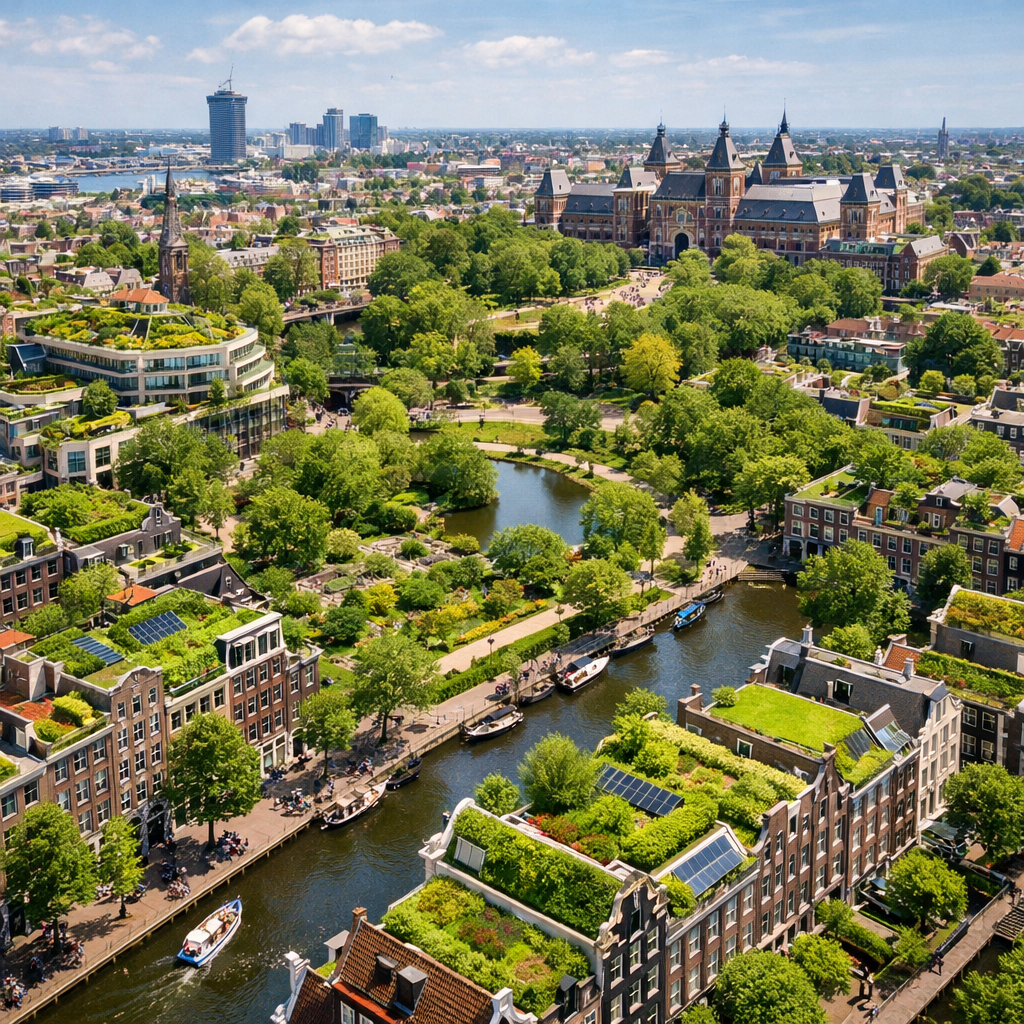
Amsterdam, like many urban centers worldwide, experiences the urban heat island (UHI) effect—a phenomenon where city areas are significantly warmer than their rural surroundings. This temperature disparity arises from factors such as dense infrastructure, limited green spaces, and human activities.
Causes of the Urban Heat Island Effect
The UHI effect in Amsterdam is primarily due to the extensive use of heat-absorbing materials like concrete and asphalt, which retain heat during the day and release it at night. Additionally, the city’s compact urban design reduces airflow, further trapping heat. The Amsterwarm project highlighted that areas with high impervious surface coverage can experience land surface temperature differences averaging 11.6°C per hectare compared to greener areas.
Impacts on the City
The UHI effect has several implications for Amsterdam:
- Health Risks: Elevated temperatures can exacerbate health issues, particularly among vulnerable populations such as the elderly and children.
- Energy Consumption: Increased temperatures lead to higher demand for cooling, resulting in greater energy consumption and associated costs.
- Environmental Stress: Prolonged heat can affect water quality, strain urban vegetation, and impact the overall livability of the city.
Mitigation Strategies
To combat the UHI effect, Amsterdam has implemented various strategies:
- Enhancing Green Spaces: Increasing urban greenery through parks, green roofs, and tree-lined streets helps cool the environment by providing shade and facilitating evaporative cooling.
- Reflective Materials: Utilizing lighter-colored and reflective building materials can reduce heat absorption.
- Urban Planning: Designing buildings and streets to improve airflow and reduce heat retention is crucial. The Amsterwarm project provides typological maps to guide urban planning in mitigating the UHI effect.
Addressing the urban heat island effect is vital for Amsterdam’s sustainability and the well-being of its residents. Through thoughtful urban planning and community engagement, the city can mitigate these challenges and enhance its resilience to climate change.