

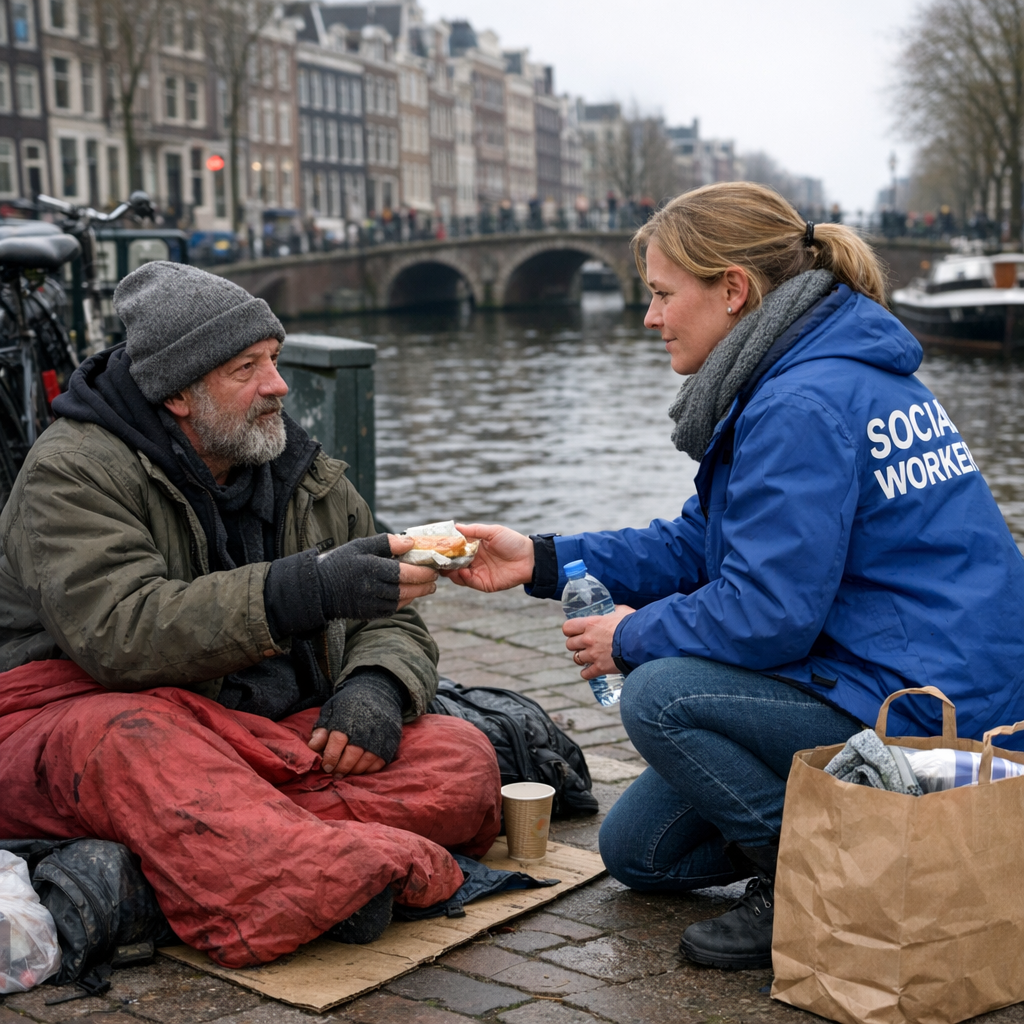
Amsterdam is confronting a significant increase in homelessness, with recent estimates indicating that over 9,300 individuals are without stable housing. This marks a 14% rise compared to the previous year, highlighting the urgency of the situation. The affected population includes approximately 1,500 children, underscoring the widespread impact of this crisis.
Several factors contribute to this escalating issue. The city’s housing shortage has made affordable accommodations scarce, leaving many residents vulnerable. Additionally, challenges such as mental health issues, substance abuse, and economic hardships further exacerbate the problem.
In response, Amsterdam has initiated various programs aimed at providing immediate relief and long-term solutions. The ‘Housing First’ approach prioritizes offering permanent housing to homeless individuals without preconditions, recognizing stable housing as a fundamental step toward recovery and reintegration. Moreover, the city has expanded support services, including mental health counseling and addiction treatment, to address underlying causes of homelessness.
Community involvement plays a crucial role in these efforts. Local organizations and volunteers are actively engaged in outreach programs, offering food, shelter, and assistance in navigating social services. Their contributions are vital in bridging gaps and fostering a supportive environment for those in need.
Despite these initiatives, challenges remain. The demand for affordable housing continues to outpace supply, and some individuals face barriers in accessing available services. Ongoing collaboration between the municipality, social service providers, and the community is essential to develop innovative solutions and ensure that all residents have access to safe and stable housing.
Addressing homelessness in Amsterdam requires a multifaceted approach that combines immediate support with sustainable strategies. By prioritizing housing, enhancing support services, and fostering community engagement, the city aims to create a more inclusive and compassionate environment for all its residents.