

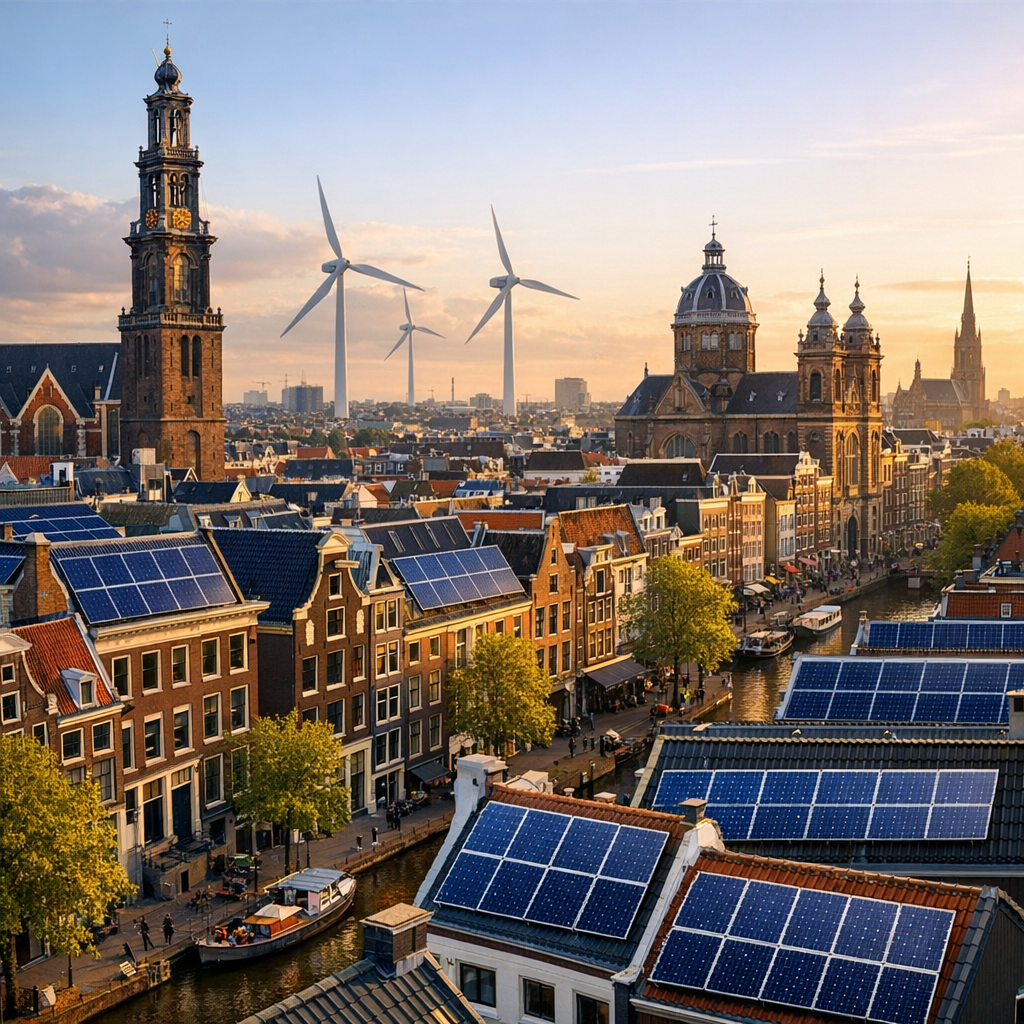
Amsterdam is actively pursuing sustainability through initiatives like the circular economy and renewable energy adoption.
Circular Economy Initiatives
The city aims to reduce the use of new raw materials by 50% by 2030 and become fully circular by 2050. This involves rethinking product design, promoting reuse, and minimizing waste. Key focus areas include food and organic waste, consumer goods, and the built environment. For instance, Amsterdam supports urban farming initiatives and projects that provide healthy school meals, aiming to make sustainable food accessible to all residents. Additionally, efforts are underway to improve the collection of organic waste and promote composting, contributing to a more sustainable food cycle. [Source: City of Amsterdam – Circular Economy]
Renewable Energy Adoption
Amsterdam is transitioning to renewable energy sources, with a goal of 80% of household energy coming from solar and wind by 2030. The city is investing in solar panels on rooftops and expanding wind energy projects. By 2040, Amsterdam plans to phase out natural gas entirely, moving towards a fully climate-neutral status by 2050. [Source: City of Amsterdam – Sustainability and Energy]
Climate Adaptation Strategies
Recognizing the challenges posed by climate change, Amsterdam has developed a Climate Adaptation Knowledge Agenda in collaboration with local institutions. This agenda focuses on preparing the city for extreme weather events, such as heavy rainfall and heatwaves, ensuring resilience and sustainability for future generations. [Source: AMS Institute – Climate Adaptation]
Through these comprehensive efforts, Amsterdam is setting a global example in sustainability, demonstrating that urban centers can lead the way in environmental responsibility.