

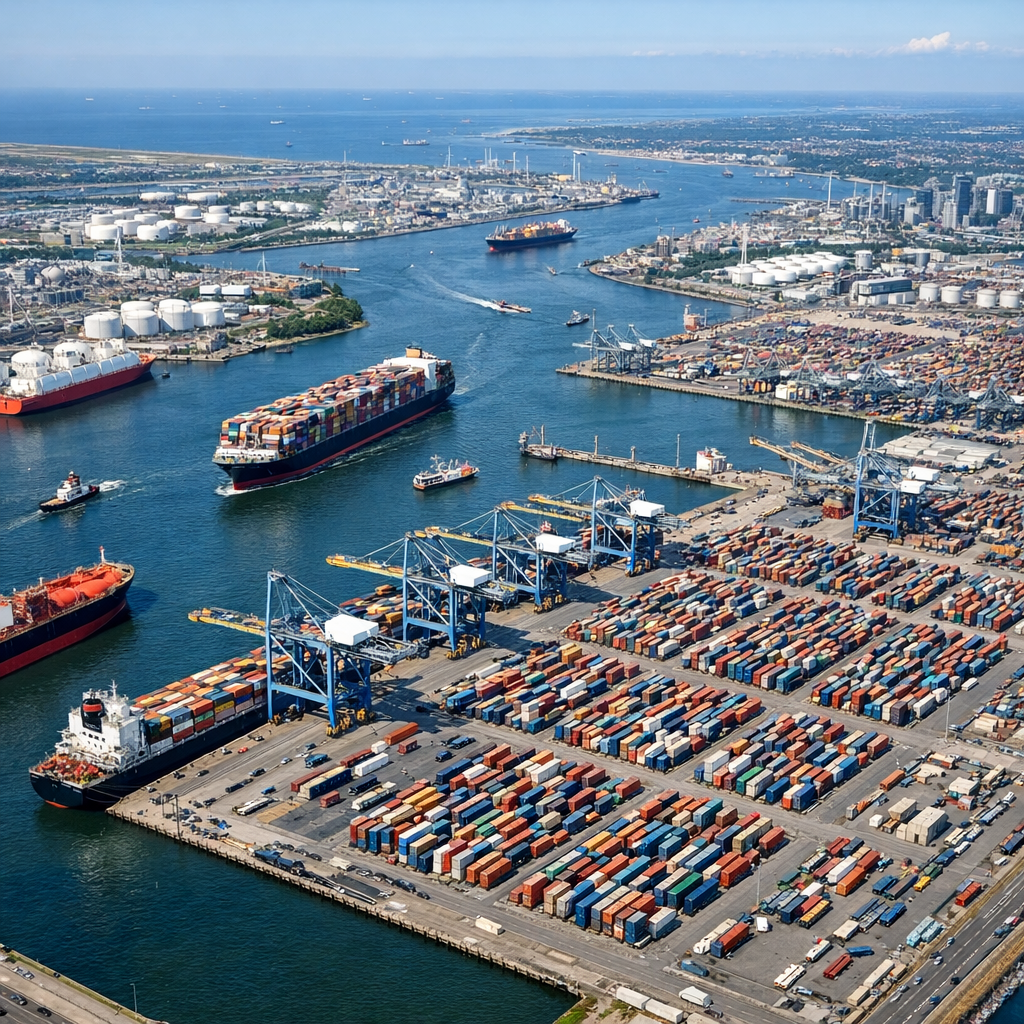
The Netherlands has long been recognized as a cornerstone of global trade, leveraging its strategic location and advanced infrastructure to facilitate international commerce. This article delves into the nation’s trade dynamics, key partnerships, and the factors contributing to its economic prominence.
Strategic Geographic Position
Situated at the heart of Europe, the Netherlands serves as a gateway to the continent. Its proximity to major European markets, combined with world-class ports and logistics facilities, positions the country as a central hub for trade activities.
Robust Trade Infrastructure
The Port of Rotterdam, Europe’s largest port, handles over 465 million tons of cargo annually, underscoring its significance in global shipping. Similarly, Amsterdam Schiphol Airport ranks among the top European airports for both cargo and passenger traffic, further enhancing the nation’s connectivity.
Diverse Export Portfolio
The Dutch economy boasts a diverse range of exports. In 2023, machinery and equipment accounted for 23% of exports, followed by manufactured goods (20%), mineral fuels (18%), chemical products (16%), and food and beverages (13%). Notably, the horticulture sector, including flowers and plants, remains a significant contributor to export revenues.
Key Trading Partners
Germany stands as the Netherlands’ largest trading partner, with substantial exchanges in machinery, chemicals, and automotive products. Belgium and France also play pivotal roles in trade relations. Beyond Europe, the United States and China are crucial partners, particularly in high-value goods sectors.
Economic Impact
Trade is a cornerstone of the Dutch economy, representing approximately 166% of the nation’s GDP. This high degree of openness underscores the country’s reliance on international commerce for economic growth and stability.
Challenges and Opportunities
While the Netherlands’ integration into global markets offers numerous advantages, it also exposes the economy to risks such as supply chain disruptions and increasing protectionism. To maintain its competitive edge, the nation is focusing on enhancing productivity through investments in innovation, digitalization, education, and artificial intelligence.
In conclusion, the Netherlands’ strategic location, robust infrastructure, and diversified export portfolio solidify its role as a linchpin in global trade. By addressing emerging challenges and capitalizing on opportunities, the nation is well-positioned to sustain its economic prosperity in an evolving global landscape.